Learn about the GrabCAD Platform
Get to know GrabCAD as an open software platform for Additive Manufacturing
Visit our new homepage
Home
Control
Shop
Streamline Pro
Partner Program
Print
Community
Log in
Library
Challenges
Groups
Questions
Tutorials
Engineers
Blog
Log in
Learn from thousands of free Tutorials.
New user?
Join the community
or
log in.
Tutorials
Most liked all time
Recent
Most liked
Most viewed
Most commented
This week
This month
All time
Category
Design & CAD
Modeling
Drafting
Assemblies
BOM
Dimensioning / Tolerancing
Translations
Manufacturing & CAM
3D Printing
Tooling
NC Machining
Composites
Measurement / Inspection
Simulation & CAE
FEM
CFD
Kinematics
Process Simulation
Engineering Fundamentals
Theory
Process
Standards
Other
Software
Snagit
Alibre Design
ArchiCAD
AutoCAD
AutoCAD Electrical
Autodesk 3ds Max
Autodesk Alias
Autodesk Inventor
Autodesk Maya
Autodesk Revit
Autodesk 123D
BricsCAD
Bentley MicroStation
BlenderCAD
BobCAD-CAM
CATIA
Delmia
DraftSight
FreeCAD
Femap
Fusion 360
Geomagic Design
IronCAD
JT
Kompas-3D
KeyCreator
KeyShot
Lagoa
Luxology
Mastercam
Moi3D
NX Unigraphics
OBJ
Onshape
OpenSCAD
Parasolid
Powermill
Powershape
Pro/Engineer Wildfire
PTC Creo Parametric
PTC Creo Elements
Rhino
SpaceClaim
SOLIDWORKS
solidThinking Evolve
Solid Edge
SolidFace
STEP / IGES
SketchUp
STL
TopSolid
TinkerCAD
T-Flex CAD
TurboCAD
VectorWorks
ViaCAD 3D
VRML / WRL
ZW3D
GrabCAD Print
Rendering
GrabCAD Community
GrabCAD Workbench
Text file
3D Manufacturing Format
Cinema 4D
Other
Intermediate
All levels
Beginner
Intermediate
Expert
components
×
Designing Axial Static O-ring Grooves to "Industry Standards"
Thomas Larson
in
Standards
9
4
Intermediate
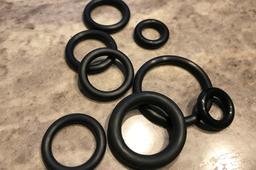
This Covers 2/3 of everything I know about designing O-ring seals. I frequently used these while designing production tools. Most the design is based on the standards that are put forth by SAE. Personally, I be going over the reiteration by Parker since it's what I learned. Other references include the Apple Rubble Product and Trelleborg for their proprietary O-ring Gland Calculators, and the help they gave me in building my own. Links to their websites are found in Section 5. All design in this lesson is for "Static Axial Design under normal conditions”. Disclaimer: while I have completed a BS in Mechanical Engineering and have passed the FE, I am not a PE. While these calculations are standard, published, and I personally have used these practices to design multiple high-pressure tools, I cannot guarantee that they a perfect. If you are in doubt, in a hazardous environment, or using in an application that could cause harm to life, I would suggest double checking with other sources (engineering) and/or extensive testing. Also, my experience is in Oil and gas, in the continental USA. You may notice my practices being bias to API standards and in English Units, I suggest you take all I say with a grain of salt. Lesson Plan: Step 1: Background and Definitions Step 2: Finding a Published O-ring Gland and incorporating it into a design. Step 3: Designing Custom Groove using the Standards Step 4: Other Design Recommendations and Drafting Example Step 5: References and Useful links A copy of the files can be found at: https://grabcad.com/library/how-to-design-an-o-ring-gland-to-industry-standards-parts-and-photos-1
seals
components
calculators
cals
design
o-rings
pressure
SolidWorks Video Tutorial: 3D Model of Rubbish Bin / Recycle Bin | Design waste Bin | Trash Can | Dustbin
Tech Hawk
in
Modeling
4
0
Intermediate
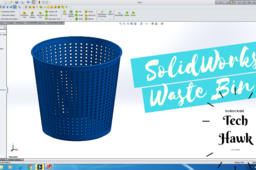
Welcome to Tech Hawk. I this SolidWorks Tutorial, I am going to show you how to design a 3D waste bin in SolidWorks 2015. This has been done in a very simple way and this tutorial is mainly prepared for beginners. Here I am going to use some features such as Shell, Linear Sketch Pattern, Circular Sketch Pattern etc. Hope it will help you! And also don't forget to subscribe Tech Hawk. #SolidWorks #3D_Modeling
SOLIDWORKS
furniture
components
appliance
home
waste
bin
rubbish
modeling
design
tools
solidworks
Rear Spoiler Design with Catia V5
Abdulkadir Yıldırım
in
Modeling
1
0
Intermediate
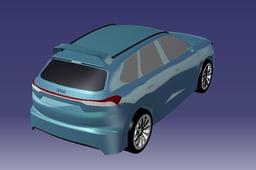
Rear Spoiler design with Catia V5
CATIA
suv
spoiler
rear
components
automotive
LAYER FOR DRAWINGS
Kulbir Sandhu
in
Drafting
0
0
Intermediate
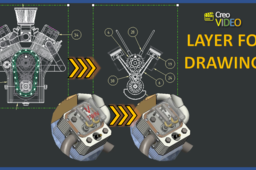
In the large Assembly, when you need to simplify your drawing view, the layer technique is the best option to deal with component visibility. Find out more in the below video. If you find it useful, Hit "Like" and share with your colleagues and friends. I will look forward for your comments, Thanks. https://youtu.be/-TciwB_hhjc
PTC Creo Parametric
views
simplified
annotations
3d
definitions
based
visibility
component
drawing
components
hiding
assembly
large
representation
model
parametric
creo