Learn about the GrabCAD Platform
Get to know GrabCAD as an open software platform for Additive Manufacturing
Visit our new homepage
Home
Control
Shop
Streamline Pro
Partner Program
Print
Community
Log in
Library
Challenges
Groups
Questions
Tutorials
Engineers
Blog
Log in
Learn from thousands of free Tutorials.
New user?
Join the community
or
log in.
Tutorials
Most liked all time
Recent
Most liked
Most viewed
Most commented
This week
This month
All time
Category
Design & CAD
Modeling
Drafting
Assemblies
BOM
Dimensioning / Tolerancing
Translations
Manufacturing & CAM
3D Printing
Tooling
NC Machining
Composites
Measurement / Inspection
Simulation & CAE
FEM
CFD
Kinematics
Process Simulation
Engineering Fundamentals
Theory
Process
Standards
Other
Software
Snagit
Alibre Design
ArchiCAD
AutoCAD
AutoCAD Electrical
Autodesk 3ds Max
Autodesk Alias
Autodesk Inventor
Autodesk Maya
Autodesk Revit
Autodesk 123D
BricsCAD
Bentley MicroStation
BlenderCAD
BobCAD-CAM
CATIA
Delmia
DraftSight
FreeCAD
Femap
Fusion 360
Geomagic Design
IronCAD
JT
Kompas-3D
KeyCreator
KeyShot
Lagoa
Luxology
Mastercam
Moi3D
NX Unigraphics
OBJ
Onshape
OpenSCAD
Parasolid
Powermill
Powershape
Pro/Engineer Wildfire
PTC Creo Parametric
PTC Creo Elements
Rhino
SpaceClaim
SOLIDWORKS
solidThinking Evolve
Solid Edge
SolidFace
STEP / IGES
SketchUp
STL
TopSolid
TinkerCAD
T-Flex CAD
TurboCAD
VectorWorks
ViaCAD 3D
VRML / WRL
ZW3D
Rendering
GrabCAD Print
GrabCAD Community
GrabCAD Workbench
Text file
3D Manufacturing Format
Cinema 4D
Other
Skill level
All levels
Beginner
Intermediate
Expert
Autodesk 123D
×
OBJ
×
Rendering
×
Text file
×
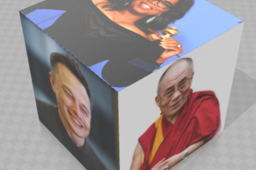
Create an OBJ Cube With Your Favorite Images
Anirudh Krishnakumar
in
Modeling
17
2
Beginner
Ever wanted to create a CAD file with your favorite pictures? There are many ways to apply images and textures to CAD files. However, for most of these operations, expensive programs or CAD experience might be required. This tutorial shows you how to make a simple OBJ cube, while explaining some of the basic OBJ nomenclature. It then explains the steps to map pictures on the cube's faces. The only tools you will need is a text editor like notepad and your favorite images!
OBJ
photo
cube
cad
map
texture
obj
35Tutorials'''' KeyShot tips(Step By Step)"''
Alireza SKH
in
Design & CAD
6
0
Beginner
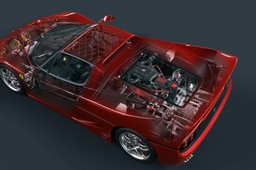
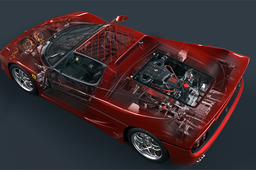
How to Create 3D Cutaways with KeyShot Renderings
Rendering
35Tutorials'''' KeyShot tips(Step By Step)"''
Alireza SKH
in
Design & CAD
5
0
Beginner
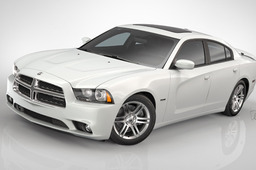
How to Create the Perfect White Paint Material
Rendering
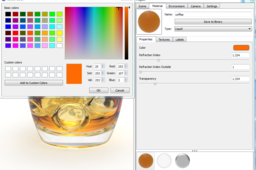
KeyShot Ice Cube Tutorial
Robert Voogt
in
Design & CAD
5
0
Beginner
And here the ice cube tutorial. (http://grabcad.com/questions/how-to-correctly-render-ice-cubes-with-keyshot)
Rendering
Need to put lights into a render.
Jitender Chaurasia (JittuARTS)
in
Design & CAD
5
0
Intermediate
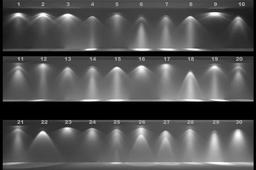
Use keyshot IES light...By this you can give real looking lightening effect
Rendering
rendering
lights
35Tutorials'''' KeyShot tips(Step By Step)"''
Alireza SKH
in
Design & CAD
5
1
Beginner
Textures in KeyShot: Creating Bump, Color, Specular and Opacity Maps (Really Fast)
Rendering
How to create 3D cutaways with KeyShot renderings
Aykut Dana
in
Design & CAD
4
0
Beginner
http://www.keyshot.com/how-to-create-3d-cutaways-with-keyshot-renderings/2012/
Rendering
3d
keyshot
create
how
cutaways
35Tutorials'''' KeyShot tips(Step By Step)"''
Alireza SKH
in
Design & CAD
3
0
Beginner
How to Render Realistic Ice in KeyShot
Rendering
35Tutorials'''' KeyShot tips(Step By Step)"''
Alireza SKH
in
Design & CAD
3
0
Beginner
8 Tips to Be More Efficient with KeyShot
Rendering
can i devided a part into 2 in keyshot?
Fateh MERRAD
in
Design & CAD
3
1
Beginner
ok Alireza no problem ^^
Rendering
How to create an environment in keyshot by yourself?
Jitender Chaurasia (JittuARTS)
in
Design & CAD
3
0
Intermediate
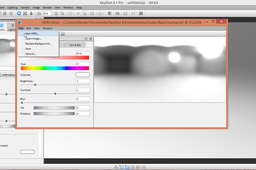
You can make your own environment by editing your HDRI
Rendering
environment
keyshot
rendering
35Tutorials'''' KeyShot tips(Step By Step)"''
Alireza SKH
in
Design & CAD
3
0
Beginner
Turning Wheels
Rendering
ADOBE PHOTOSHOP TUTORIAL - How to prepare decals for Rendering
ioan skurka
in
Modeling
2
2
Beginner
ADOBE PHOTOSHOP TUTORIAL How to prepare decals for Rendering
Rendering
photoshop
decals
rendering
35Tutorials'''' KeyShot tips(Step By Step)"''
Alireza SKH
in
Design & CAD
2
0
Beginner
How to Create Clear Tinted Glass in KeyShot
Rendering
3D Modeling of a Braitenberg Vehicle in 4 Steps using Autodesk 123D Design
Yoana Ivanova
in
Modeling
2
0
Intermediate
This tutorial is suitable for designers who have a basic knowledge of using the open source product Autodesk 123D Design. The steps to build a Breitenberg vehicle are as follows: 1. Modeling a wheel: a cylinder with a diameter of 2 cm and a height of 0.5 cm is placed in the workspace. Drill a hole in it by drawing a circle with a diameter of 0.3 cm and extruding - 0.5 cm with the Extrude tool. We soften the edges of the cylinder with Fillet Radius: 0.5. 2. Clone the wheel: rotate the resulting wheel 90° along the Z axis and copy it with Ctrl+C and Ctrl+V. 3. Modeling the vehicle body: regarding the design of the vehicle body, there are various options. In this case the author models a classic vehicle, which is most often shown in the bibliographic sources. After drawing and extruding a surface with the desired shape we apply Fillet with radius 35 on the back edge and with 30 on the front edge for a contemporary design (i could provide more images if it is needed). On the selected side edges we successively apply Fillet with a radius of 9. 4. Make a special place for the sensor: it is necessary to select the square plane that is located in the middle of the case and successively apply Sketch > Project, Sketch > Offset and Construct > Extrude with a negative value.
Autodesk 123D
breitenberg vehicle
1
2
3
4